
How endue uses a Decision API for agents, models, and voice
A few small decisions sit between a request and an agent’s reply. See the real endue interface and a short animated diagram of how model routing and voice chat work.
On this page
“Tin, move next week’s meeting.” Before writing a long answer, an AI has smaller questions to settle: Was that spoken to me? Which agent should take it? How much thinking does it need?
endue uses a decision model for these short choices. It picks from options we define and returns a confidence value. The selected agent then does the work and replies. OpenAI put its own Decisions API into public beta on October 6. Today, endue uses TypeSafe Jev through OpenRouter’s Decisions API, not OpenAI’s new endpoint. The two services address the same kind of problem, but they have different providers and request formats. The official OpenAI guide and OpenRouter’s Jev guide describe each one.
The choice you can see: automatic models
In an agent’s Studio › Models › Auto selection, you choose models for light and difficult requests. Select “Auto” in a conversation and endue judges the request’s difficulty, then follows the mapping you set. If that judgment fails or is too uncertain, it uses the default model.
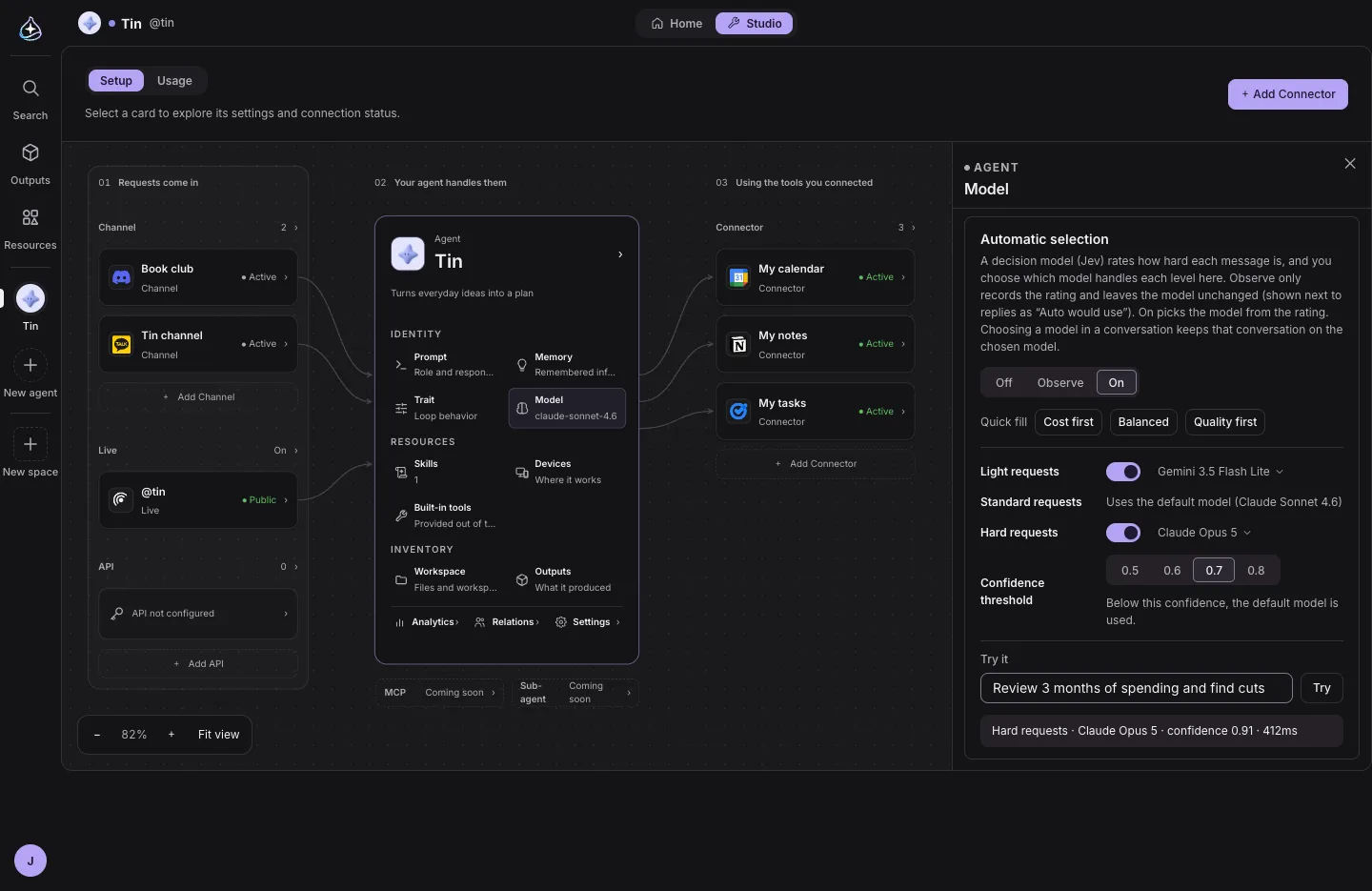
There is another small choice when you send a request without picking an agent. endue considers agents’ names and descriptions. When no clear match appears, it uses your configured default or lets you choose. In a room with several agents, it also chooses who should answer and whether a brief reply will do.

The roles are simple. The decision model chooses a route. The agent checks the calendar, finds information, writes, and answers.
In a call, it first decides whether to answer
The voice chat screen lets you call an agent and speak. When listening mode is enabled, speech is transcribed first. endue then considers the words and the current state and chooses among a few actions: reply, wait for the sentence to finish, keep listening, or stop. Talk between other people can pass without interrupting the agent. “Wait, there’s more” can make it hold. A request addressed to the agent can start work.
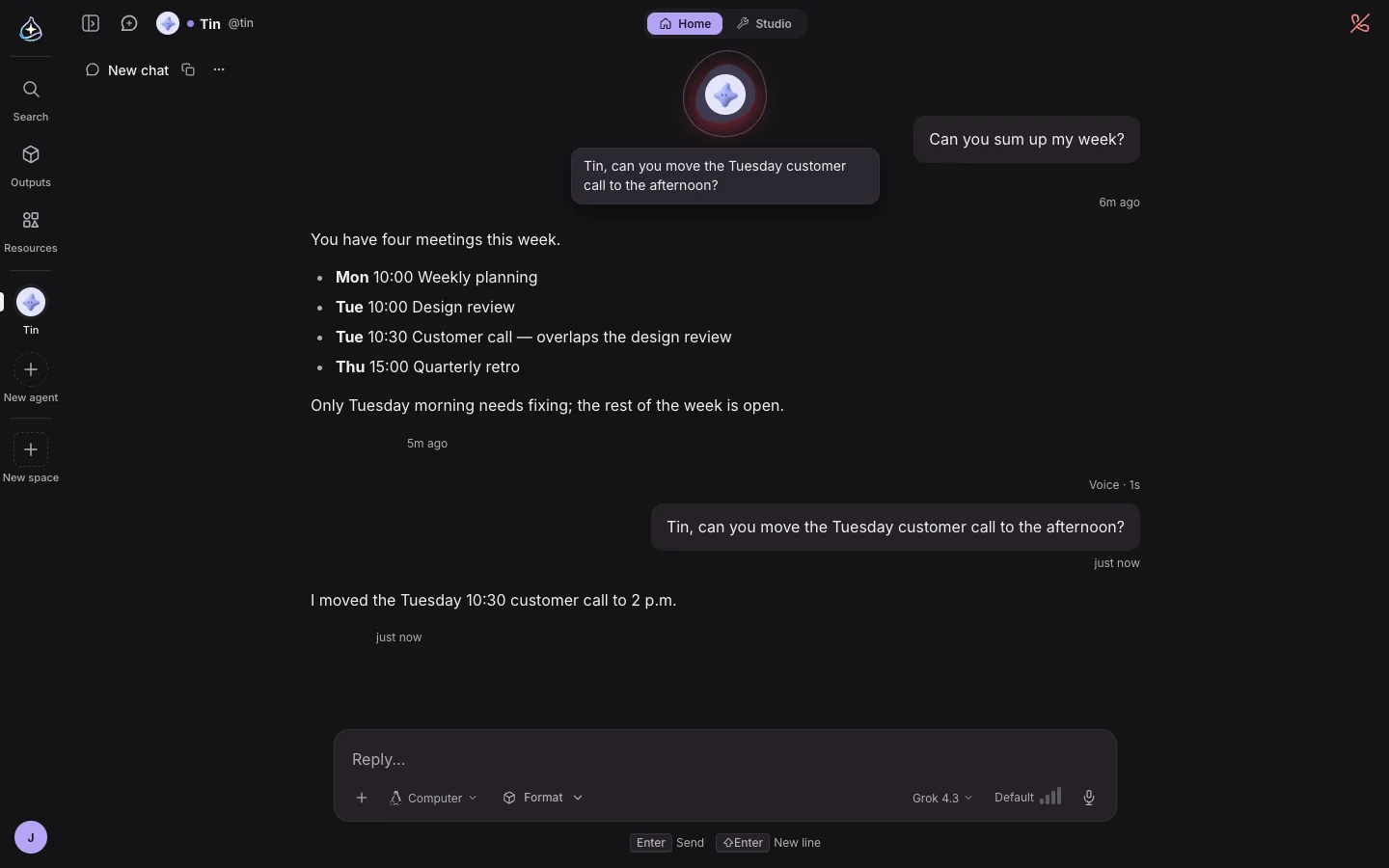
“How far have you got?” during a task can be treated as a progress question. “Tell me when it’s done” can set how the agent reports back. A short answer to a question the agent just asked is read with that question in mind. If the decision is uncertain or unavailable, predefined fallback behavior applies. Listening mode is not used on every voice call; availability depends on the account and settings.
The rules still belong to people
A confidence score is not permission to act. endue uses the default model when model routing is uncertain, or returns agent selection to you when it cannot find a clear fit. Voice decisions only offer actions valid in the current state. Separate permissions and approval rules govern the tools an agent can run.
To see the model choice yourself, select “Auto” in a conversation, then try one easy and one complex question in Studio’s Try it field. If voice calling is available for your account, make a short request and ask for its progress while the agent works. The screen shows how those small decisions become one continuous conversation.
Checked October 10, 2026. API availability comes from OpenAI’s changelog and official guide; Jev’s response format comes from OpenRouter’s official documentation. Screenshots show example endue product screens.