EndueEndue
← Releases
2026.09

Steady ground for longer work

Three weeks of fixes to the places where runs, sessions, and models quietly went wrong. Plus a rebuilt Studio canvas, tools for finding and organizing long conversations, plans you approve before work starts, and four new connectors.

Endue 2026.09 release key visual

Highlights

Agent Studio

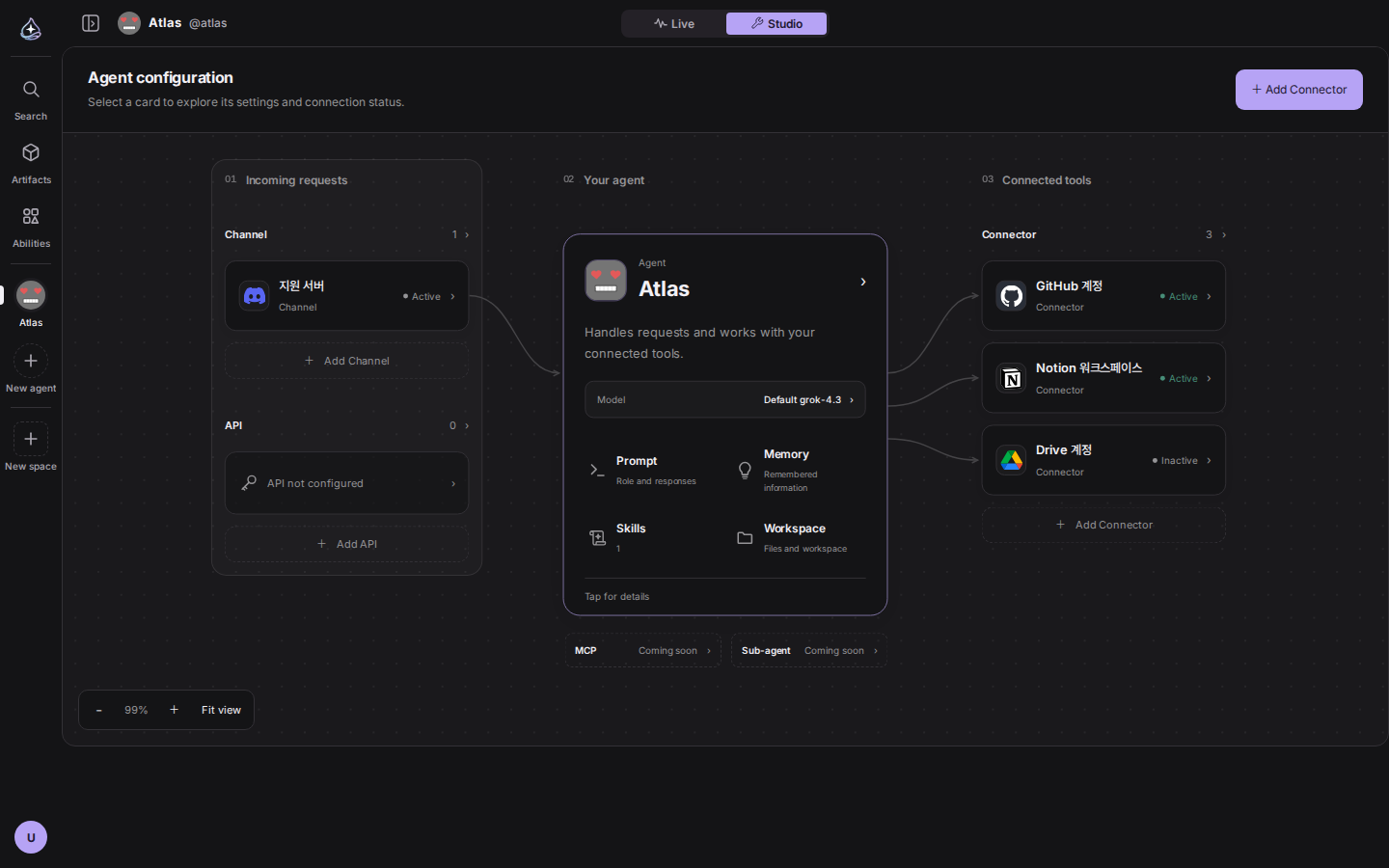
A new canvas with your agent card in the middle, where requests come in on the left, and the tools it works with on the right.

Long conversations

Hop between questions with the ticks on the left, search inside a conversation with ⌘F, and group conversations into folders.

Plans and approvals

Read the plan before work starts. Tools you use all the time can be allowed once for this agent.

Reliability

Double charges, a reply that never ends, input that vanishes. We closed the paths that let these happen.
Agent Studio

Studio canvas: the agent card in the middle, channels and API on the left, connectors on the right

We redrew the canvas. Your agent card stands in the middle. The channels and API that bring requests in stand on the left, and the connectors it works with on the right. Name and connection status live inside each card, so there are no shapes to decode. Click a card and edit it in the side panel.

While data loads, skeleton cards hold each spot, so an empty canvas is never mistaken for an empty setup. The dot grid follows pan and zoom, and dragging no longer selects text. The skill and connector sections gained a button to the catalog, and the stop button and API key revocation now actually work.
Finding your way in long conversations

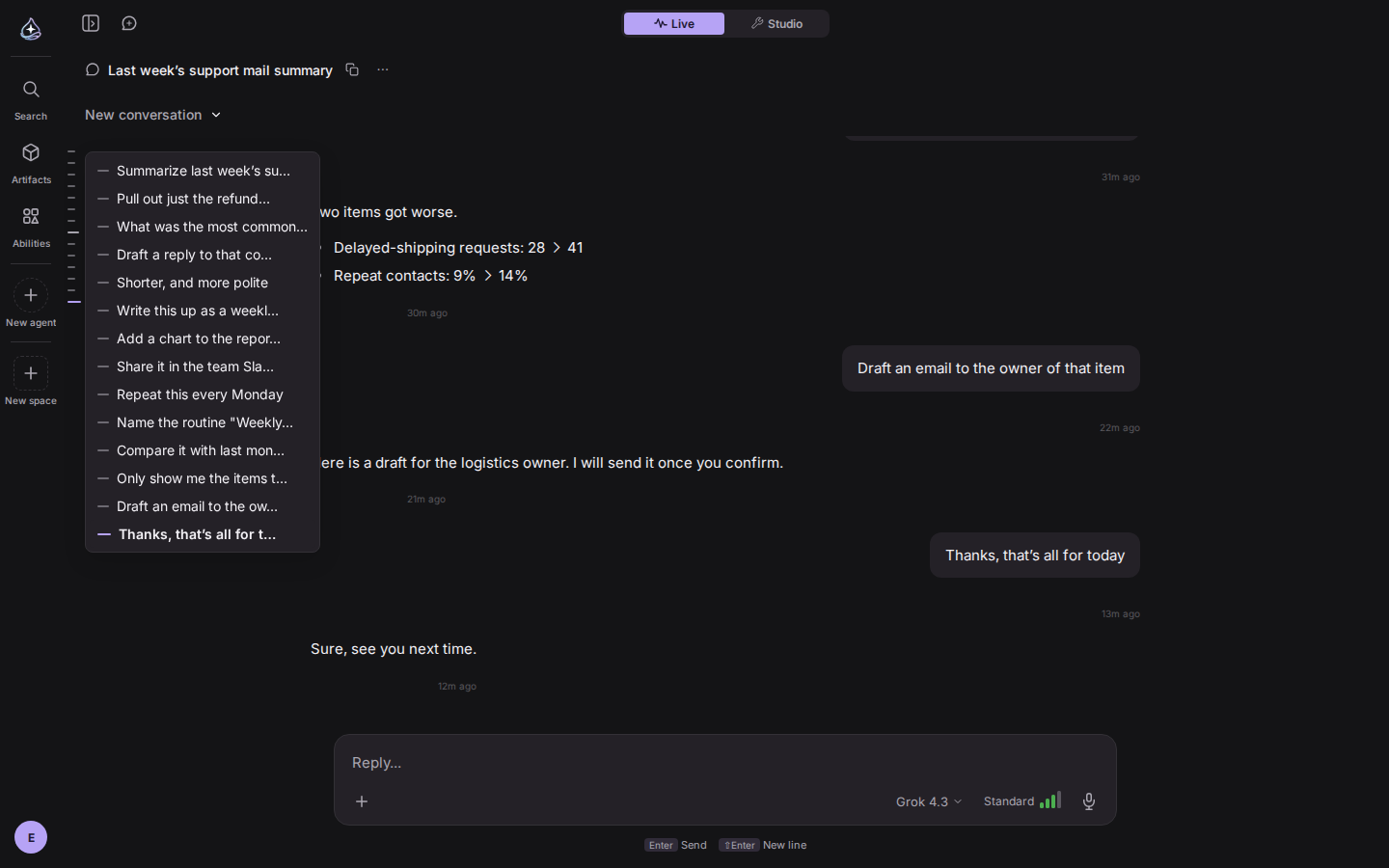
Anchor rail: ticks on the left and the list of questions

Long conversations are easy to get lost in. Each question now leaves a tick on the left edge. Hover to see the list of questions, click to jump.
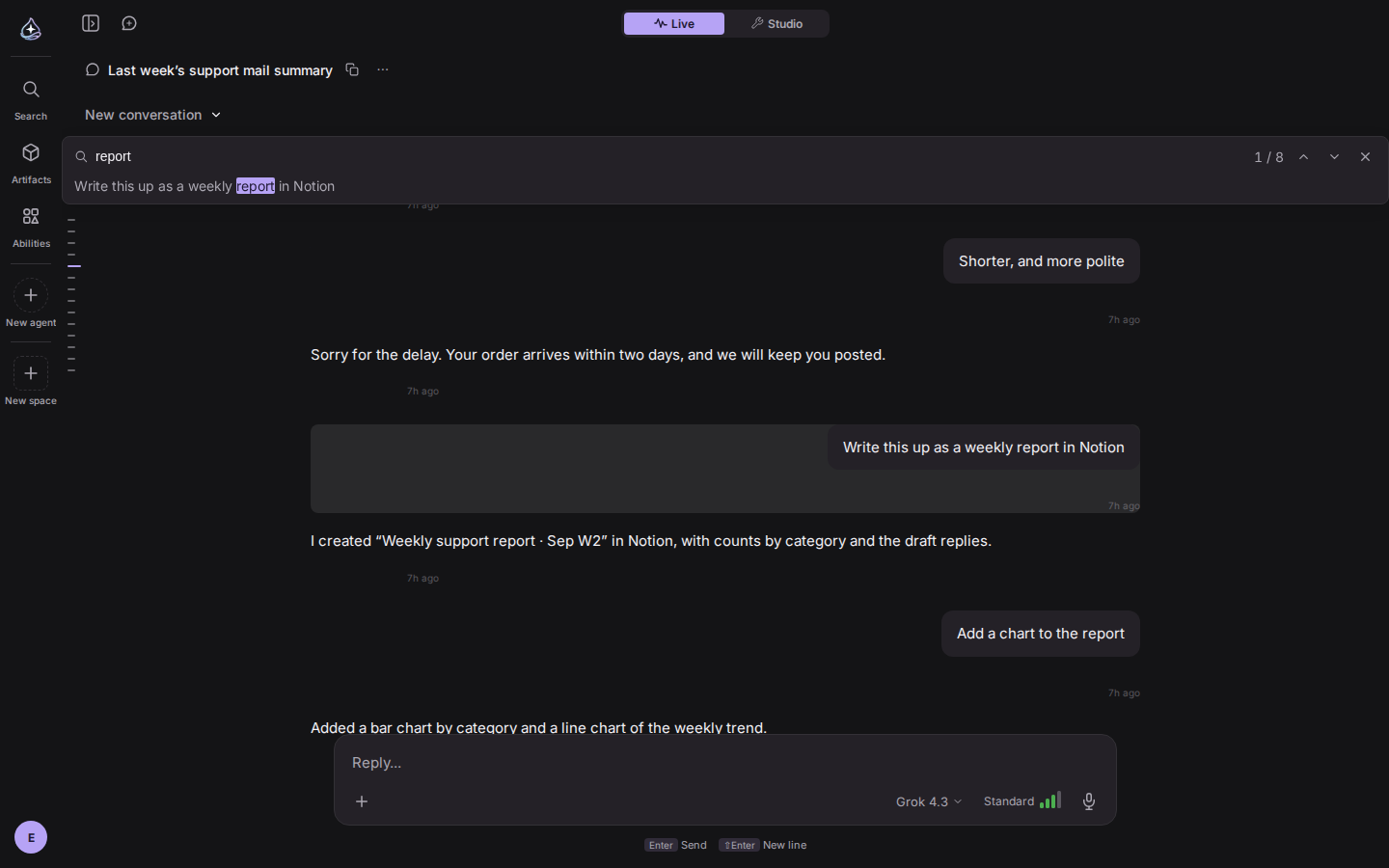
Find in conversation: the query and match count

Scroll up and earlier messages load in, all the way back to the first one, even in a conversation hundreds of turns long. Press ⌘F to search inside the conversation. Enter moves to the next match, Shift+Enter to the previous, and you can see which one you are on. A divider shows where the model’s memory of the conversation was trimmed.
Organizing conversations

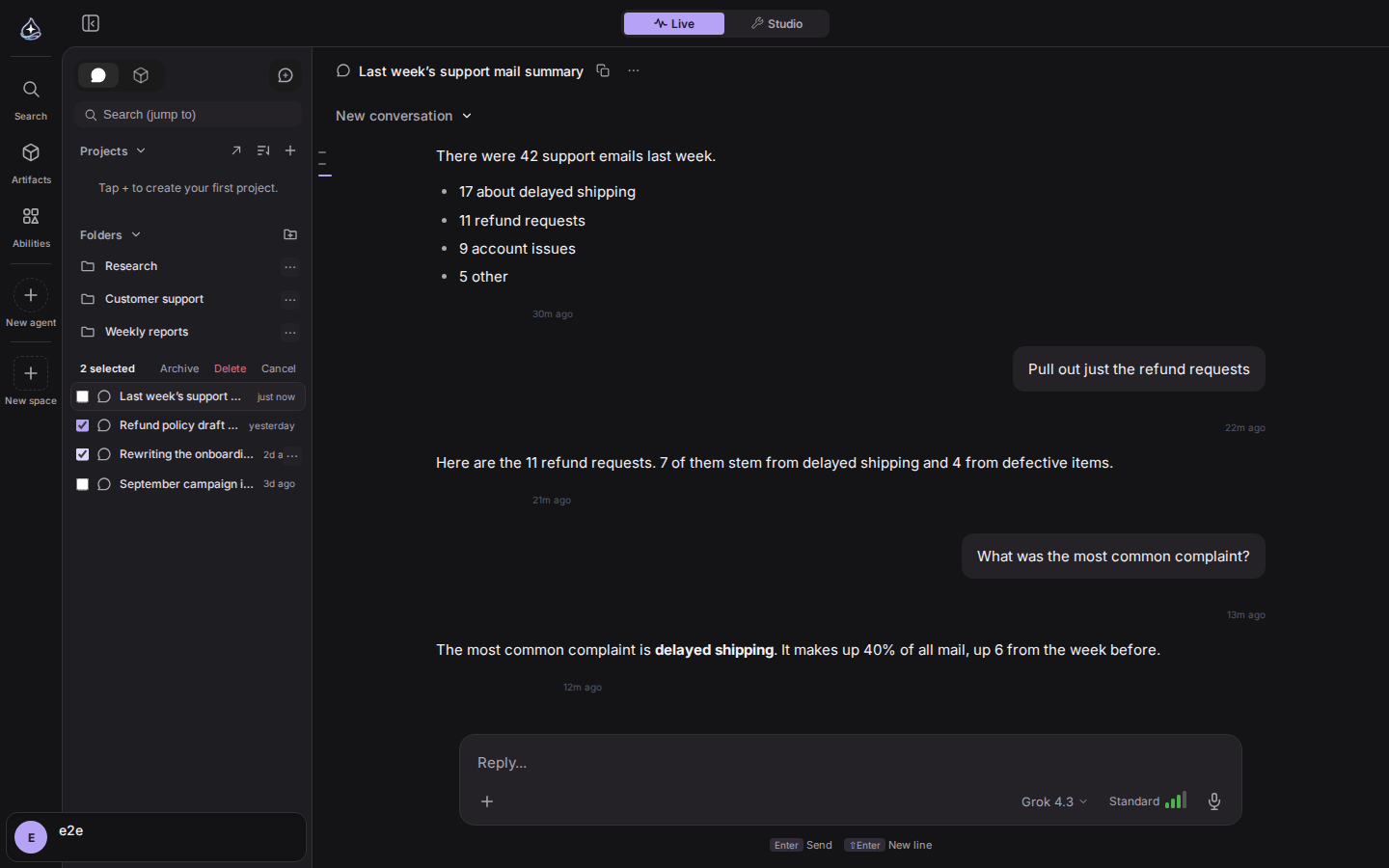
Sidebar: three folders and multi-select

Make folders, name them, and drag conversations in. Select several conversations and archive or delete them at once. The ⌘K palette now has commands that act on the conversation you are looking at, and delete asks once more inside the palette.

Search covers tool output, and archived conversations can be included with a toggle. A conversation waiting for your reply can be marked done without one. Routines can be renamed, and /rename works as a one-liner. Pins, sort order, and filters are saved to your account, so they are the same on every device.
Plans and approvals

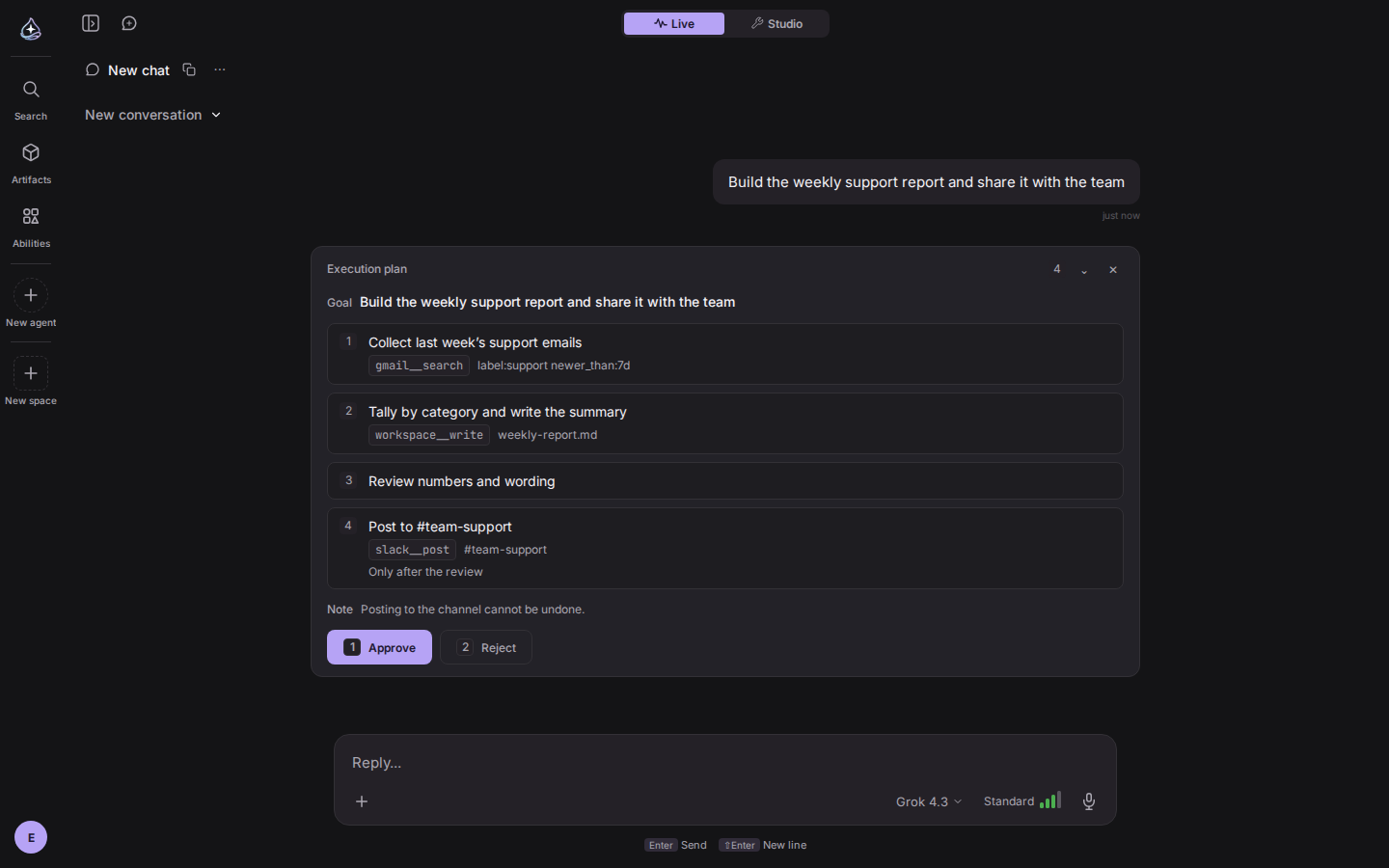
Plan card: goal, steps, tools, and targets

For work that takes several steps, a plan card comes first. The goal, the steps, and the tool and target for each step are laid out in one place. Approve and the agent proceeds. Reject and it asks again.
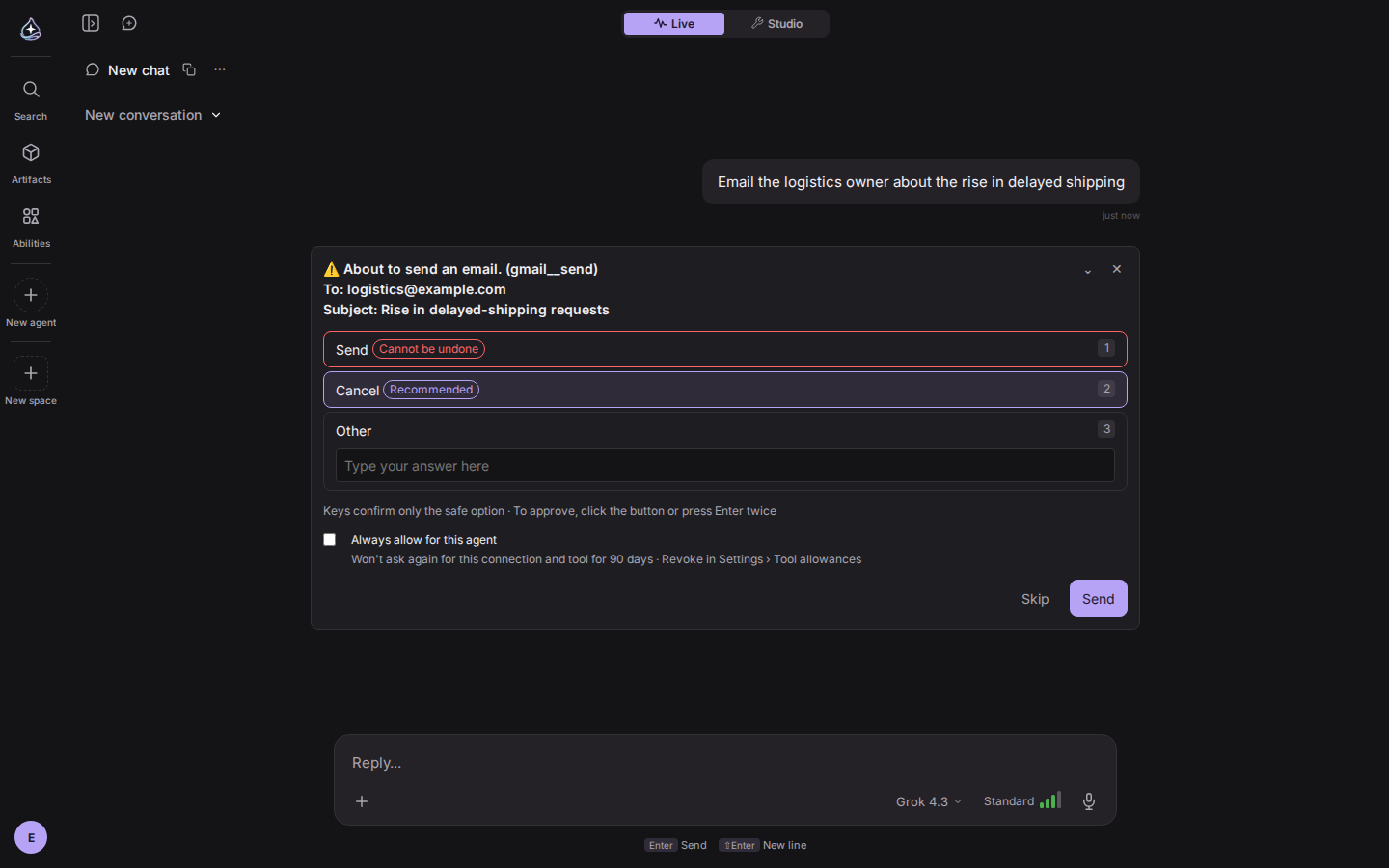
Approval card: send confirmation and the always-allow checkbox

On an approval card, one keypress can only cancel. Approving takes a click, or Enter twice, and an Enter pressed mid-composition never leaks through. For tools you approve over and over, like sending mail, turn on “Always allow for this agent”. The same tool on the same connection goes unasked for 90 days, and you can cancel that in settings at any time. Irreversible actions like delete are never remembered.

If a conversation went the wrong way, rewind it from the message menu. It returns to the point before that message, and stays there when you come back.
Sources under every answer

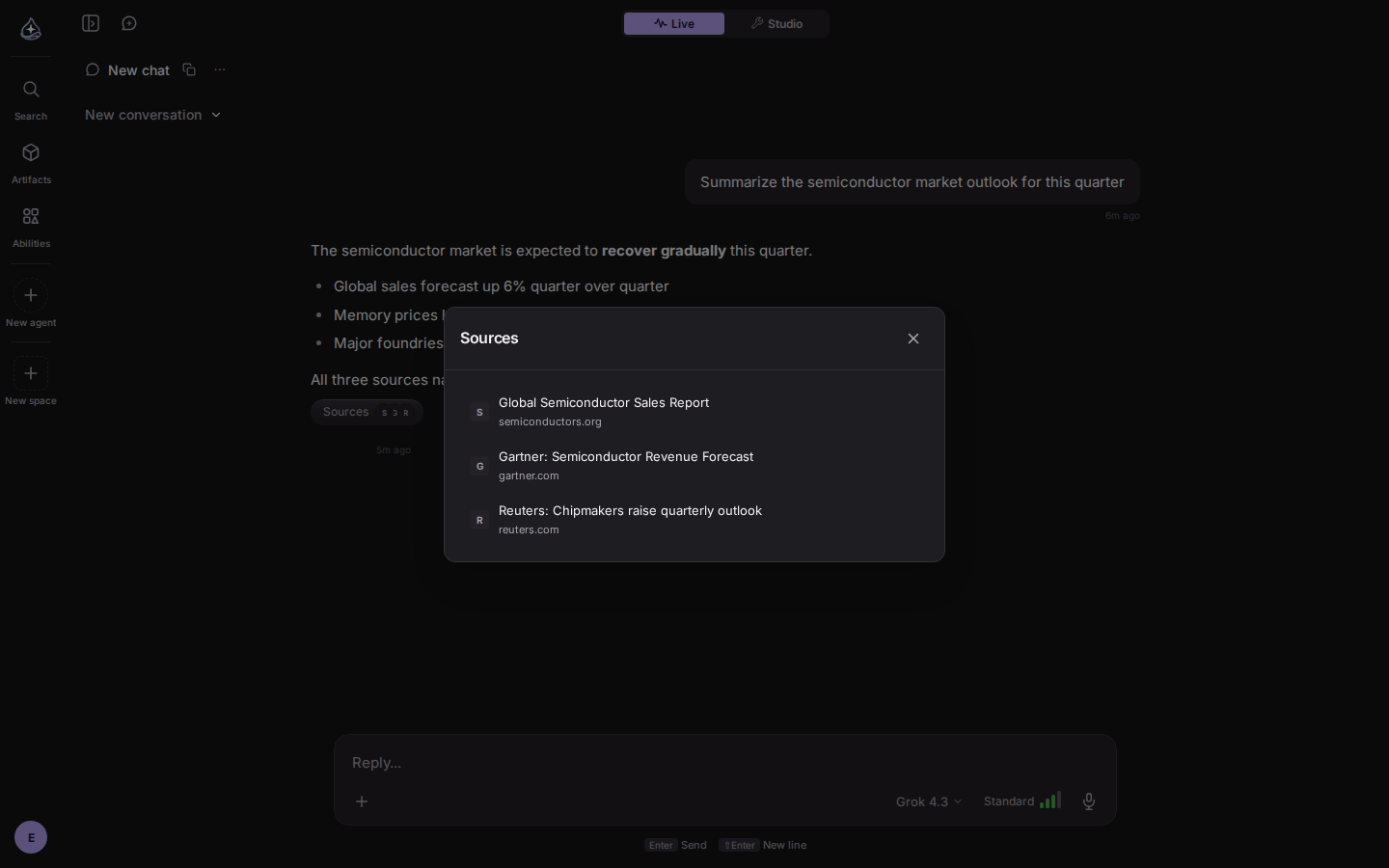
Sources list: titles and domains

An answer that drew on outside material gets a sources chip underneath. Click it for titles and domains, each opening in a new tab. Math renders as LaTeX, and links you paste are clickable. Code blocks select whole on triple-click, copy from a right-click menu, and never drag the prompt symbol along.
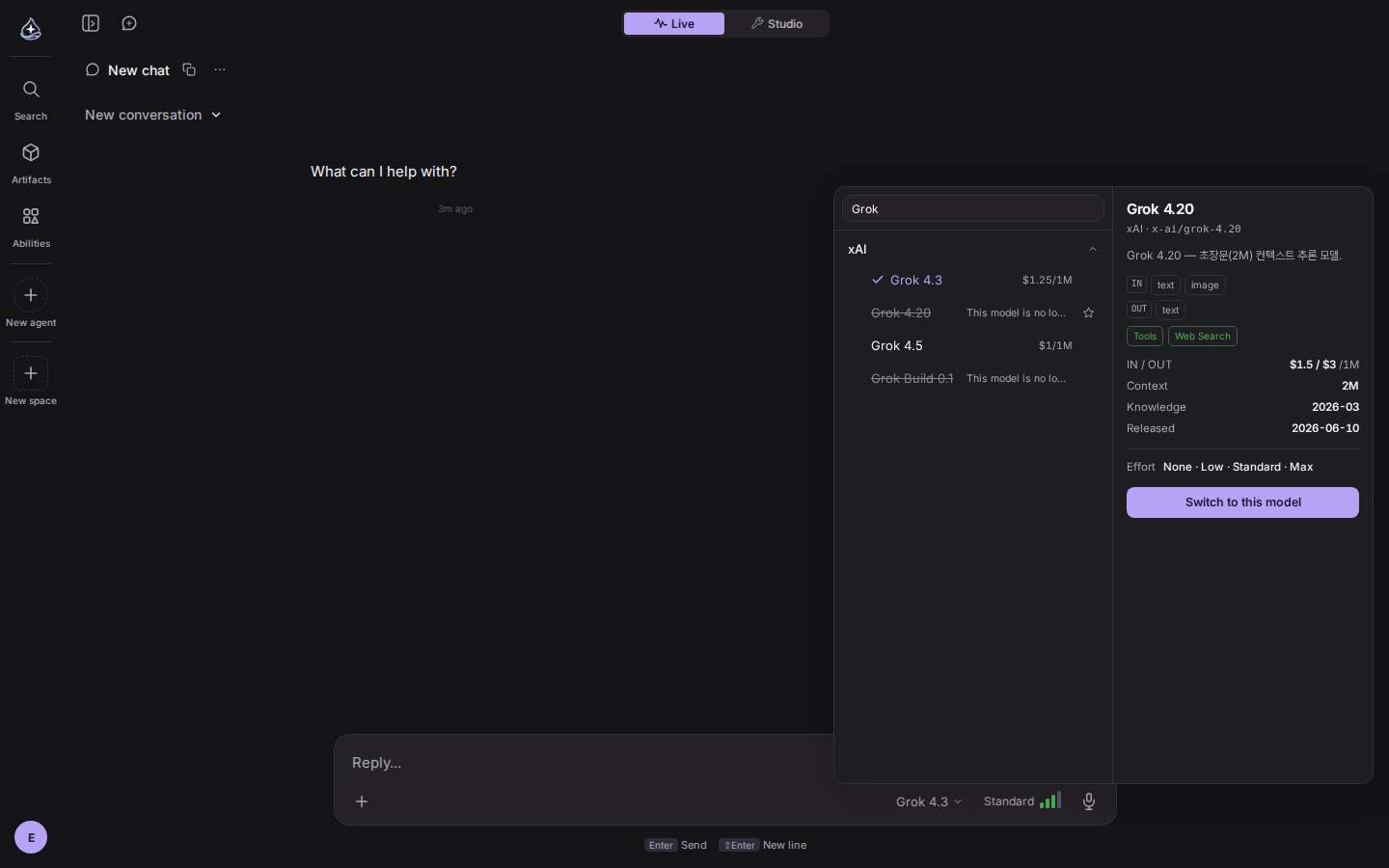
If you can pick a model, it answers

Model picker: a removed model disabled with a reason

A model that has left the service stays in the list greyed out, with the reason next to it, and cannot be picked. A model that is briefly unstable only warns. If the model you were using disappears, the composer tells you first. Effort levels and Fast routing come from the live catalog, so nothing downgrades quietly.
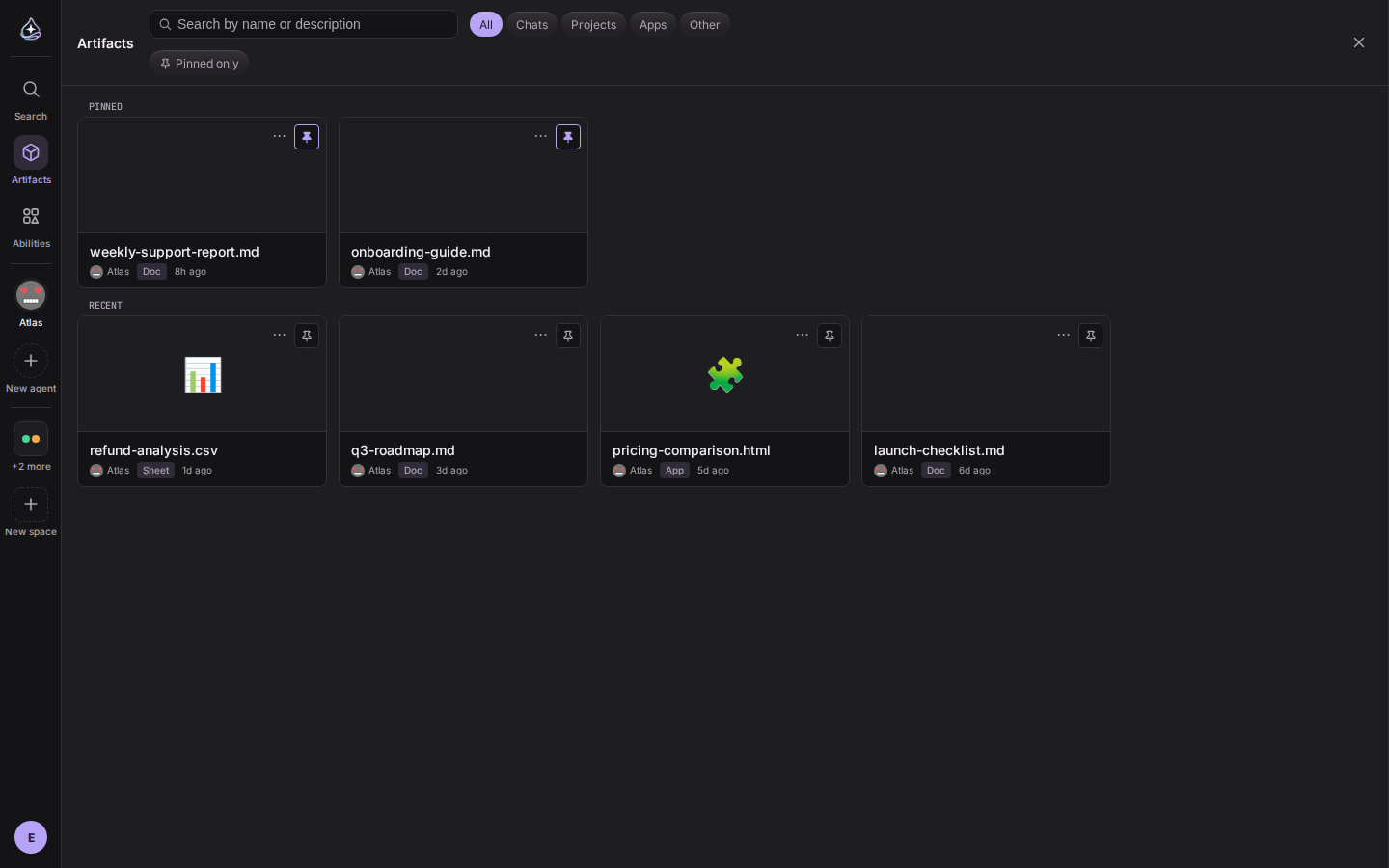
Artifacts

Artifact gallery: search, source filters, pins

Search the gallery by name and filter by source: conversation, project, or app. Pins are saved to your account. The viewer shows the latest content after the agent re-saves a file, and renders images, PDFs, audio, and video inline. The original download works for every format. Copy link and open in place moved into the canvas header, and app files are shown as a directory tree.
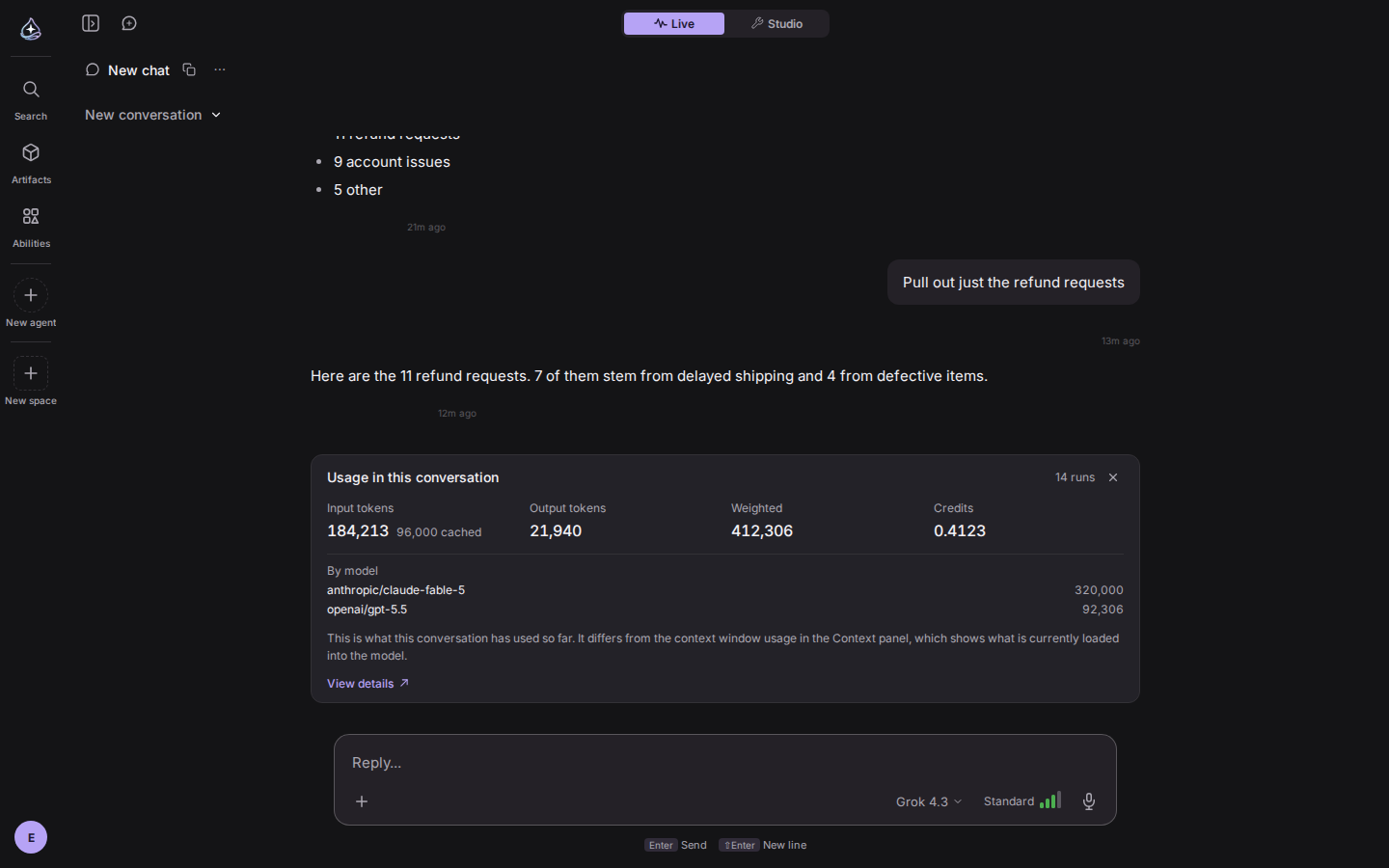
Usage

/usage card: tokens, weighted total, credits, per model

Type /usage in a conversation and a card shows the input and output tokens, the weighted total, and the credits this conversation has used. It arrives without a model call. The usage window opens from the account menu, and its compute tab shows measured storage and which meters are wired up. When you hit a limit, the banner says which limit and when it resets.
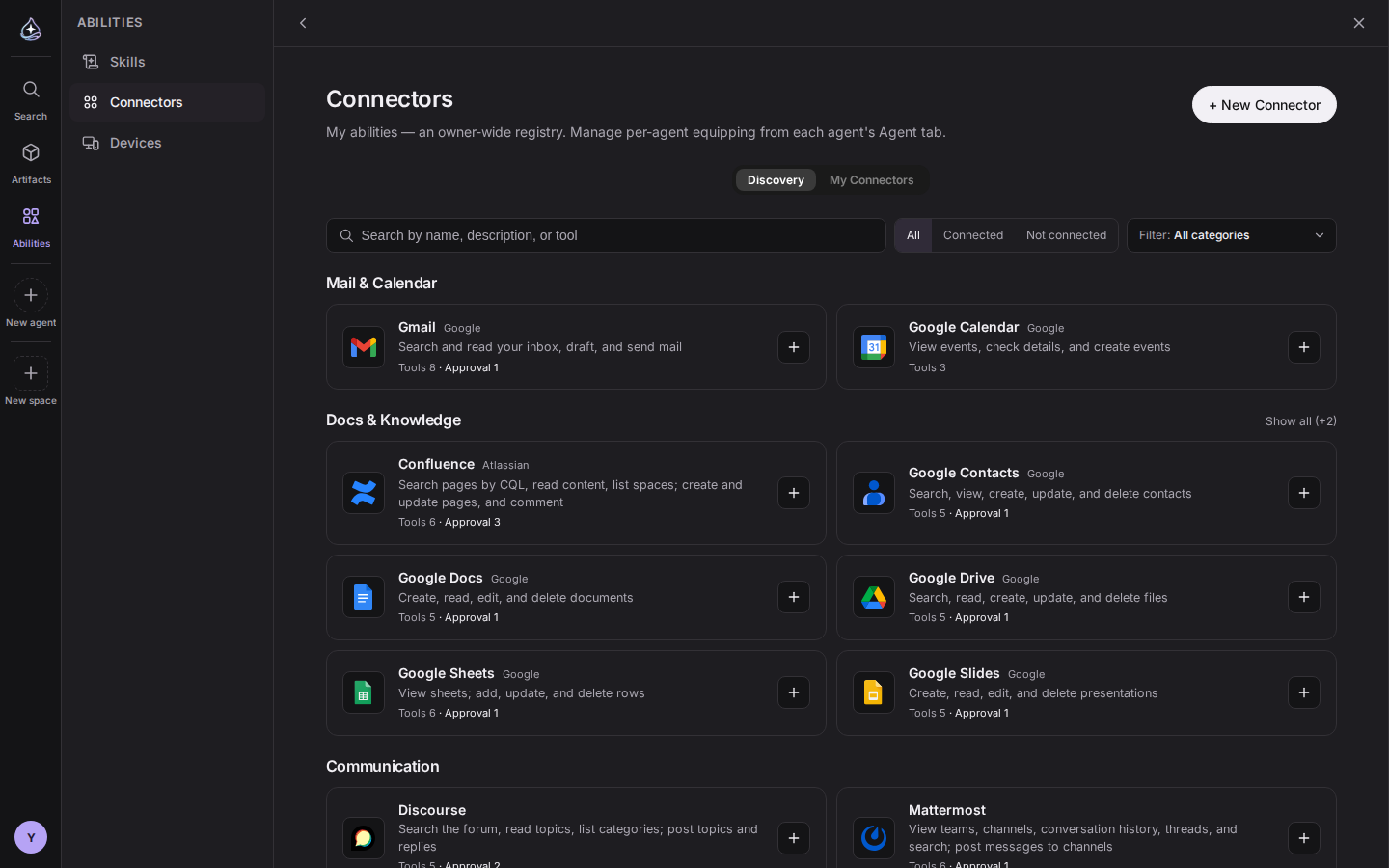
Connectors

Connector discovery: row cards by category

The catalog became a discovery view. Each row shows an icon, a summary, the number of tools, and how many need approval, with a single button to connect. Categories collapse, and there is search and a connection filter.

Dropbox, GitHub, Outlook, and Google Analytics are new. WordPress now covers categories, pages, and comments, and WhatsApp is a two-way channel. With many connectors attached, the tools shown to the model rotate within a budget, so your context does not fill up. Notion, Jira, Linear, and GitLab links pasted into a conversation are read through your own connection. Your agent can also be called as an MCP server.

Reliability

Half of this release was repair work.

  • A retry no longer stores the same message twice and charges for it twice.
  • A broken stream is noticed and reattached. “Responding” never gets stuck.
  • Deleting or archiving a conversation stops its run, and no zombie “running” badge is left behind.
  • Routine runs are never quietly lost. A failed run retries, and the first failure sends a notice.
  • One broken card no longer takes down the whole screen.
  • Drafts are kept per conversation, and a blocked send keeps your input. Attachments sent mid-run reach the model.
  • An auto-generated title no longer overwrites the name you gave.
  • We found why sign-ins kept dropping and fixed it. A successful token refresh now counts as proof the session is alive.
  • Going offline shows a banner, and coming back retries. A new version announces itself.
  • A conversation that fails to load shows the reason instead of an empty screen.

Know when it is done

Turn on browser push and you get a notification when a run finishes, even with the tab closed. Notifications for the screen you are watching are not sent twice. On the Activity board you can stop a running task and see which tool it is using.
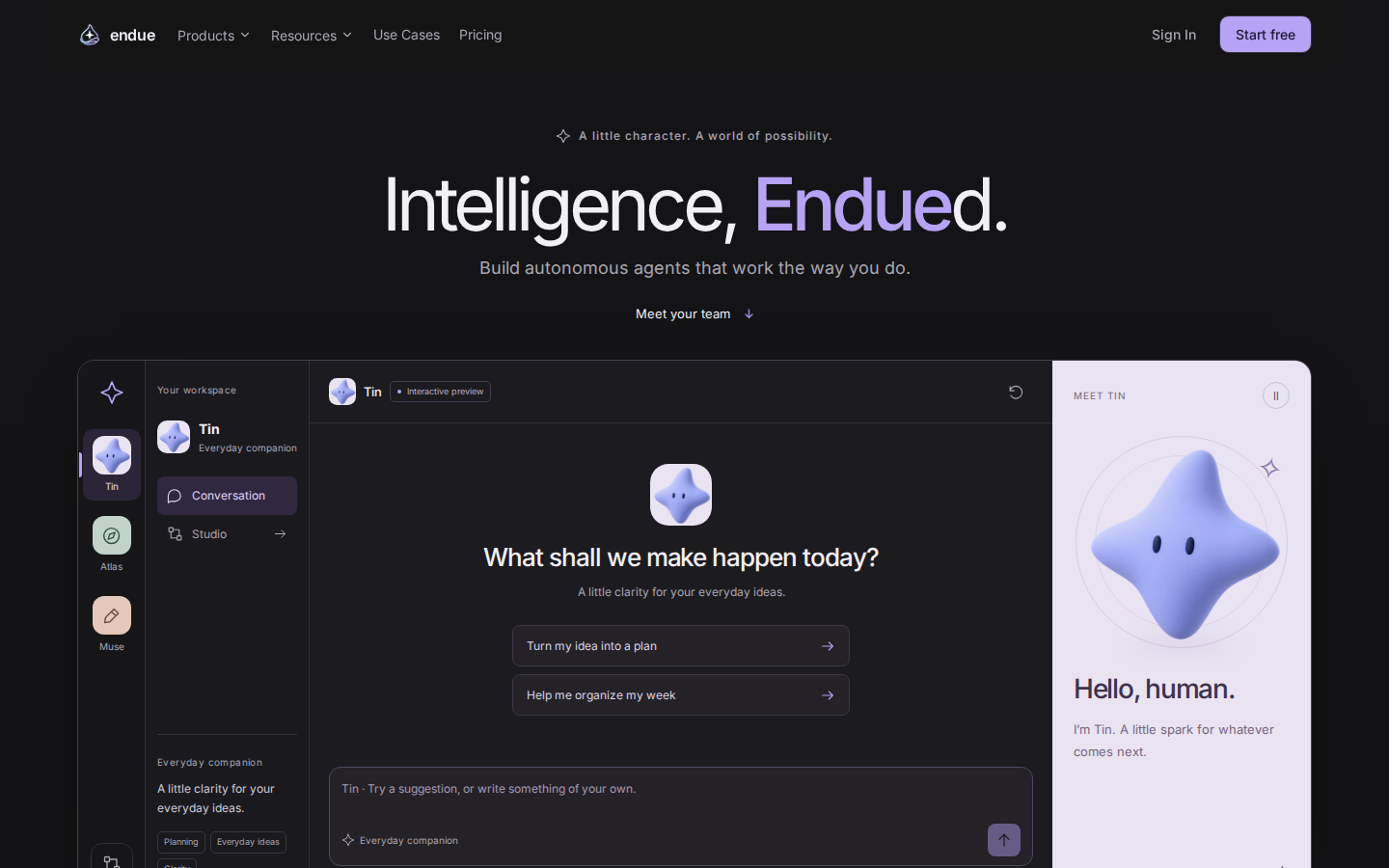
A fresh coat of paint

Landing: Tin and the interactive preview

The console and the public pages now share one color system. On the landing page you can talk to three agents, Tin, Atlas, and Muse, without signing in.
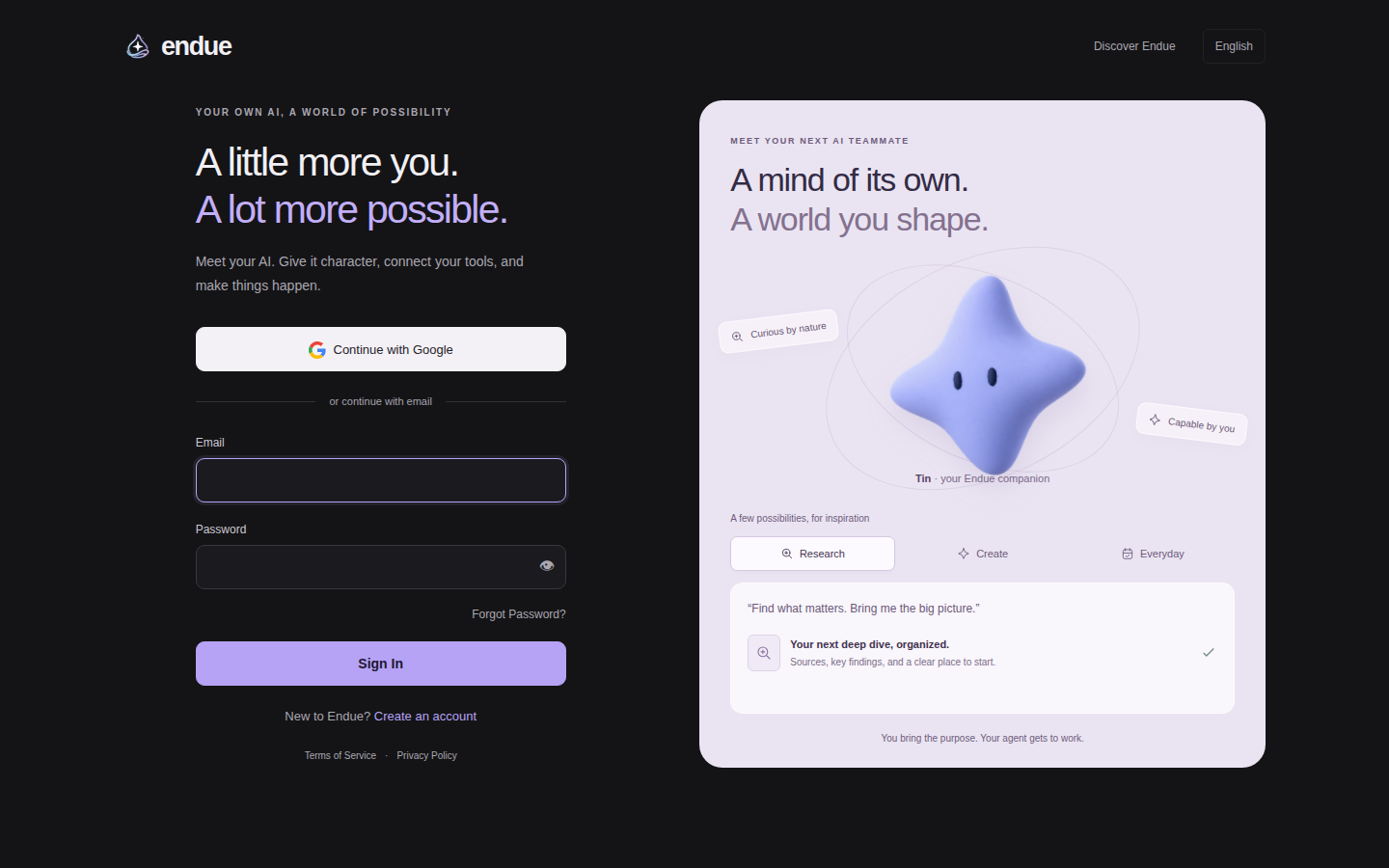
Sign-in: Tin and example prompts

The sign-in page was rebuilt in two columns. Google gets you in directly, and signup asks for your consent to the terms. Pill buttons share one texture: a filled face with a light edge on top. The settings and usage windows are larger, settings reopen on the tab and section you last viewed, and modals work with the keyboard alone.

Docs and public pages

The docs have a Korean edition. All 36 pages are at /ko/docs, and the docs now live under endue.ai/docs. The three home tabs and three new settings screens are documented. The root landing is a static page, so it opens without the console bundle. Business information is in the footer.

Security

Gateway rate limits are enforced, and required token claims are checked. External URL fetches block internal networks and limit redirects and response size. Public pages and console docs carry security headers, and artifact previews render in isolation.

Fixes24
  • SessionA retry no longer stores the same message twice and charges for it twice.
  • SessionEarly stream termination is detected and the run reattaches. No more permanent “responding”.
  • SessionDeleting or archiving a conversation cancels its run, and no zombie “running” badge remains.
  • SessionAuto-generated titles no longer overwrite a name you set yourself.
  • SessionA conversation that fails to load shows a screen with the reason instead of an empty chat.
  • ChatDrafts are kept per conversation, and a blocked send keeps your input.
  • ChatAttachments added while steering a run now reach the model.
  • ChatOne bad event or card no longer takes down the whole screen.
  • ChatThree progress indicators are now one line.
  • ChatA single keypress can no longer confirm an irreversible action on an approval card.
  • ChatEffort levels no longer downgrade silently, and Fast routing is shown.
  • RoutinesRuns are never lost. A failed run retries, and the first failure sends a notice.
  • ArtifactsThe viewer shows the latest re-saved content, and images, PDFs, audio, and video render and download.
  • AuthA 401 after a successful token refresh no longer ends the session. The re-auth screen shows why you were signed out.
  • AuthSigning out leaves the console entirely instead of leaving its shell behind.
  • AuthSwitching accounts keeps data separate, and auth requests time out.
  • AuthA signup started in Korean stays in Korean, with fewer required fields.
  • AccountDeleting an account cleans up auth, the database, and related resources together.
  • SkillsSkills built with the wizard are saved, and failed drafts can be recovered.
  • StudioThe stop button and API key revocation now actually work.
  • AgentRunaway agent loops are stopped by a per-step cap and a repetition hard stop.
  • AgentPressing Enter mid-composition on the create screen no longer creates an agent.
  • WorkspaceFixed device sockets that stayed awake all day and devices stuck in “provisioning”.
  • WorkspaceThe agent now pings first and recovers a half-open socket on its own.
Improvements37
  • StudioIndependent node canvas, loading skeletons, a dot grid, and no text selection while dragging.
  • StudioThe skill and connector sections link to the full catalog.
  • ChatAnchor rail: a tick per question, a hover list, and click to jump.
  • ChatScrollback pagination and find in conversation (⌘F).
  • ChatA divider marks where the model’s context was trimmed.
  • ChatLaTeX rendering and auto-linked URLs in your own messages.
  • ChatTriple-click and right-click on code, clean copies, and shell syntax highlighting.
  • ChatA sources chip and list under answers.
  • ChatBuilt-in slash commands, starting with /usage.
  • ChatThe routine suggestion button appears under an answer only when it fits.
  • SessionConversation folders: create, rename, drag to move, reorder.
  • SessionMulti-select archive and delete, plus palette commands that act on the current conversation.
  • SessionSearch covers tool output, with archived conversations as an opt-in.
  • SessionMark a waiting conversation as done without replying.
  • SessionPins, sort, and filters are saved to your account, and projects can be ordered.
  • SessionConversation rewind.
  • SessionPlan cards: review and approve.
  • SessionRemembered tool allowances: always allow for this agent.
  • ModelsAvailability: removed models are disabled with a reason, degraded ones only warn.
  • ArtifactsGallery search, source filters, and pins saved to your account.
  • ArtifactsCopy link, open in place, and a private-link warning in the canvas header.
  • AppsApp files are listed as a directory tree.
  • ActivityStop a run from the board and see the tool it is using.
  • NotificationsBrowser web push.
  • UsageA compute tab with measured storage and metering state, and a usage window in the account menu.
  • BillingLimit banners say which limit you hit and when it resets.
  • BillingPlans shown as three tiers: Free, Pro, Max.
  • WebOffline and reconnect banners, and a notice when a new version is available.
  • SettingsSettings reopen where you left off, and the settings and usage windows are larger.
  • AccessibilityFocus enters, cycles within, and returns from modals.
  • ThemeThe console and public pages share one palette. Pill buttons have one texture.
  • AuthA two-column sign-in page with pricing, Google sign-in, and terms consent at signup.
  • AgentChannels are a separate axis in the onboarding tool picker.
  • AgentBuilt-in tool settings apply immediately.
  • WebThe root landing is a static page with an interactive agent preview.
  • DocsKorean docs at /ko/docs, docs merged under endue.ai/docs, the site shell, and more product screens.
  • WebBusiness information and legal notices in the footer.
Connectors and channels11
  • ConnectorsDropbox: search, browse, read, upload, delete.
  • ConnectorsGitHub: search repos, issues, and PRs, and read files.
  • ConnectorsOutlook: search, read, draft, and send mail.
  • ConnectorsGoogle Analytics: GA4 properties, reports, and realtime metrics.
  • ConnectorsWordPress: categories, pages, comments, and editing published posts.
  • ChannelsTwo-way WhatsApp.
  • ConnectorsDiscovery view: row cards, category sections, search, and connection filters.
  • ConnectorsWith many connectors, the tools shown to the model rotate within a budget.
  • ConnectorsNotion, Jira, Linear, and GitLab links are read through your own connection.
  • ConnectorsCatalog copy in English and Korean.
  • APIAn MCP server that wraps the public API.
Security4
  • SecurityAPI Gateway rate limits are enforced, and required JWT claims are checked.
  • SecuritySSRF guards, redirect limits, and response size limits on external URL fetches.
  • SecuritySecurity headers on public pages and console docs, with isolated artifact previews.
  • SecuritySchema cleanup: orphaned foreign keys and anon permissions revoked.