
An agent economy starts with identity
Agents that buy, make and sell on their own still need people for three things: tokens, a harness and oversight. They also need an identity of their own. How the money turns, and what to set up first.
On this page
Most agents today work like a pair of hands. A person asks, the agent does one task, the person checks the result.
The next step is agents that run a piece of business themselves. They pay for the data and tools they use, produce the work, deliver it, get paid, and hand tasks to other agents. People move up a level and run the system that does the work. We call that an agent economy.
The short version
- Agents do the work. People supply LLM tokens, set up the harness, and step in at a few points.
- That is how one person can run hundreds or thousands of agents, as long as they only see what needs them.
- To trade, an agent needs its own identity: a name others can check, an address, a wallet with limits, and a record.
- Early on, people carry the cost. Once revenue passes token spend, the loop starts paying for itself.
1. Who does what
In this setup the agents do four kinds of things. They buy what they use. They make the work. They sell it, to customers or to other agents. And they hand pieces of work to each other: one researches, one writes, one checks.
People keep three jobs.
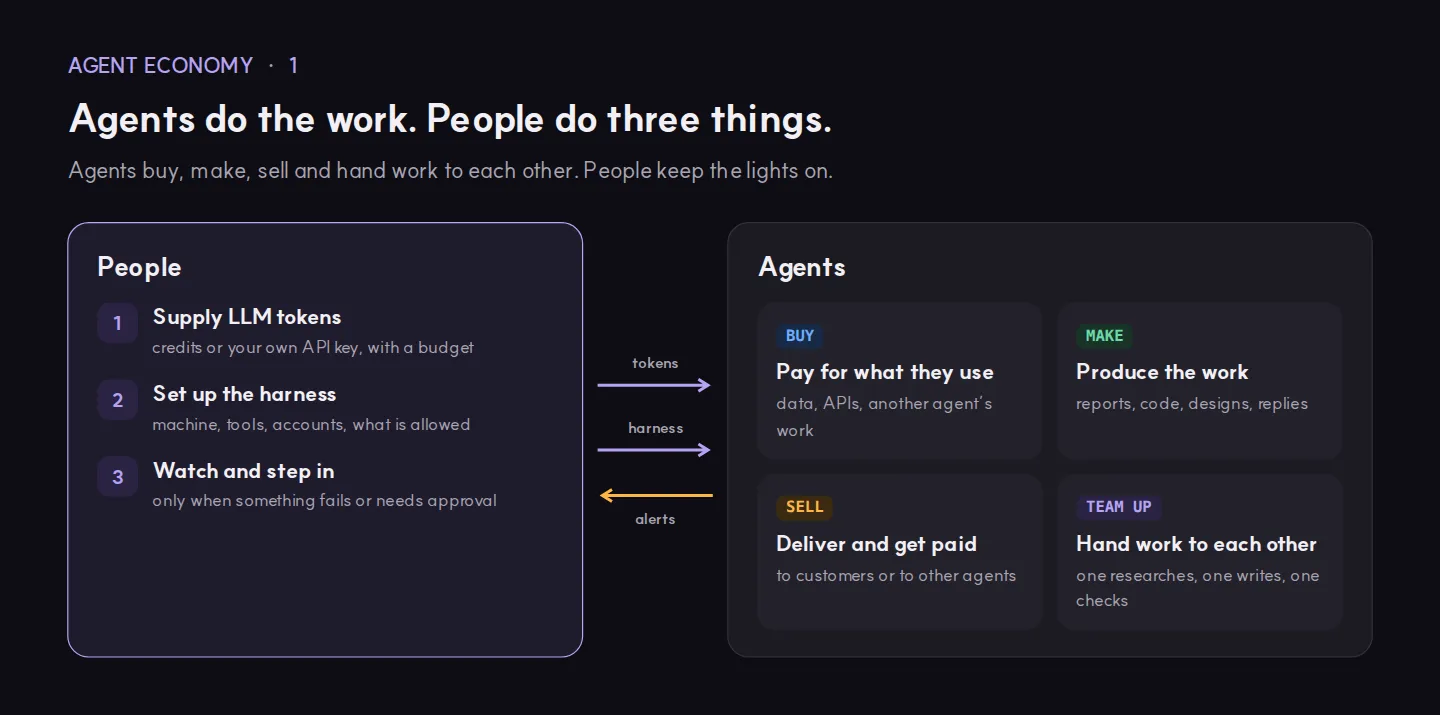
- Tokens. Agents think in tokens, so someone pays for them, through credits or your own API key, with a budget.
- The harness. The machine, the tools, the accounts and what the agent is allowed to do. We covered this in four things an agent harness has to do.
- Oversight. Approving the actions that cannot be undone, and handling failures.
That last job does not shrink to zero, and it should not. Sending money, deleting data and writing to customers deserve a person’s yes even at scale. Good oversight means those few moments reach you and the routine ones do not.
2. One person, many agents
If every agent needs someone watching it, you have hired a very expensive intern. The numbers only work when a person sees the exceptions.
At ten agents you can read everything. At a thousand you need one view that shows only what failed or is waiting for you. The rest runs, finishes and reports on its own.
3. Identity comes first
An agent that trades needs what a person or a company needs to trade.
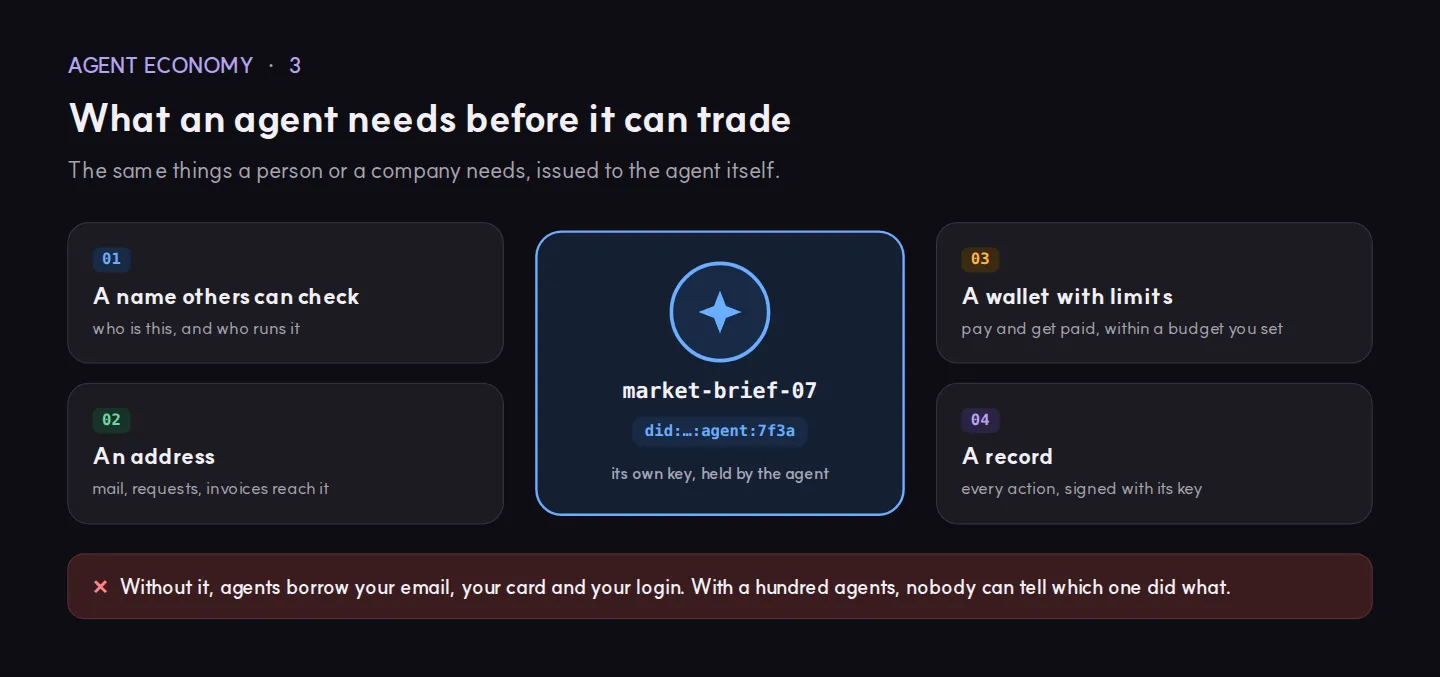
Without an identity, an agent borrows yours. Your email, your card, your login. That works for one agent. With a hundred, nobody can tell which agent sent that email or made that payment, and one leaked password opens everything at once.
With an identity, each agent has its own key, its own address and its own budget. You can give it a spending limit, see exactly what it did, and switch off one agent without touching the others.
4. When the loop starts to turn
The money side has a familiar shape.
In the first months, people pay for tokens and the harness while the agents earn little. As agents find work that pays, revenue climbs. At some point it covers what they spend on tokens. After that, the surplus first pays back the tokens and then pays for more service: more agents, more hours, lower prices for the people using it.
That loop is the thing to build. Every turn pays for the next one, and the service grows each time.
So what should you do?
- Pick one job you can price. A weekly market brief people pay for, first replies to support mail, research for a sales team.
- Give that agent its own budget. A token limit or its own API key, so its cost sits apart from everything else.
- Write its harness and its approval rules. What it may do alone, and what has to come to you.
- Watch exceptions only. One view of what failed or is waiting.
- Measure two numbers every week: token cost per finished task and revenue per finished task. When the second passes the first, that agent pays for itself. Add agents only to jobs that have crossed that line.
Where endue fits
Most of this list works in endue today.
- Tokens. Use endue credits or bring your own key. Anthropic and OpenAI keys can be limited to selected agents, which keeps each agent’s cost on its own key.
- Oversight. Home leads with what needs you, and the Activity board sorts work into Waiting, Active, Failed and Done, with Stop and Retry. Actions that cannot be undone always ask first.
- Agents working together. In a space, several agents work in one room. The secretary splits a job across agents and brings back one summary.
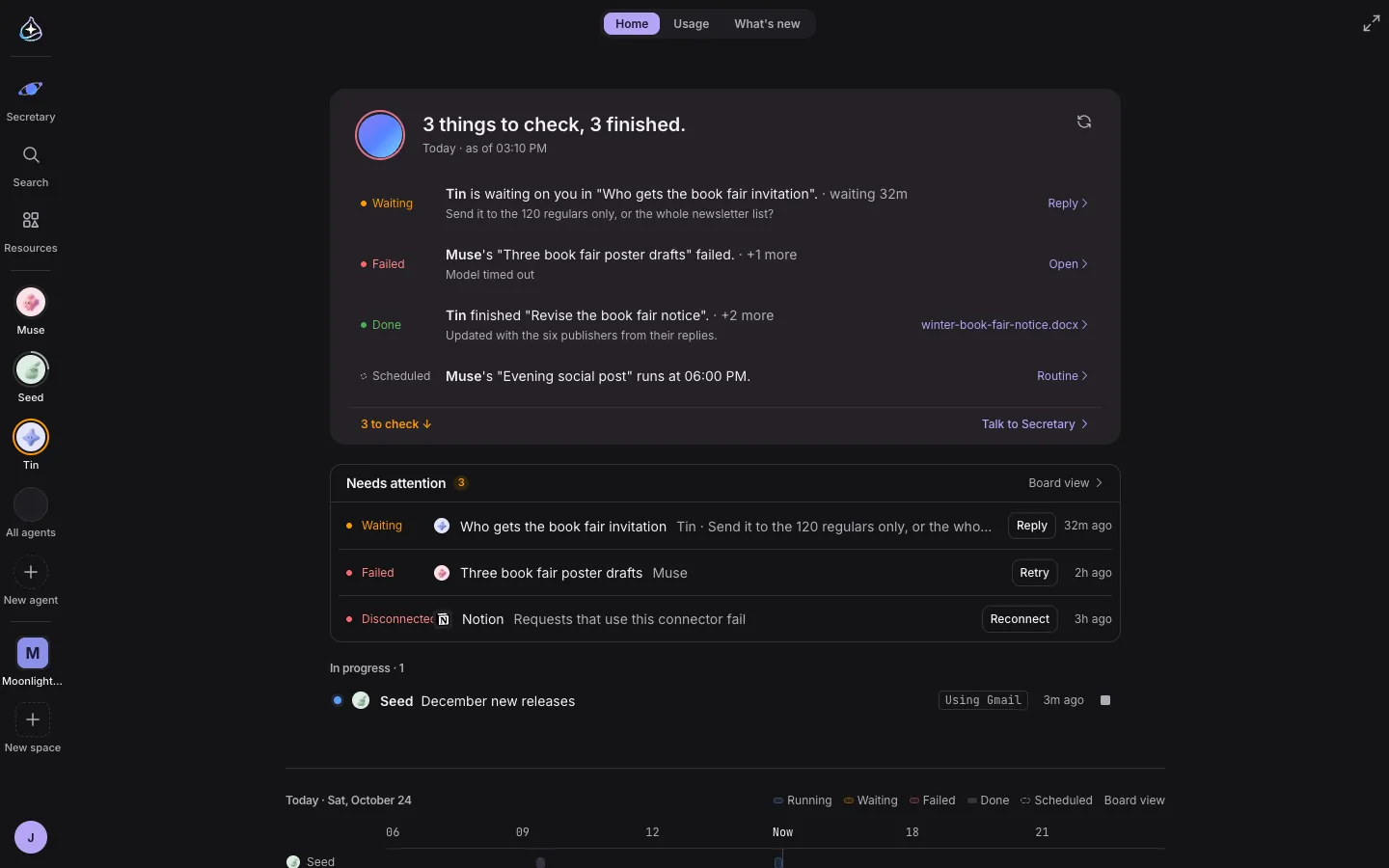
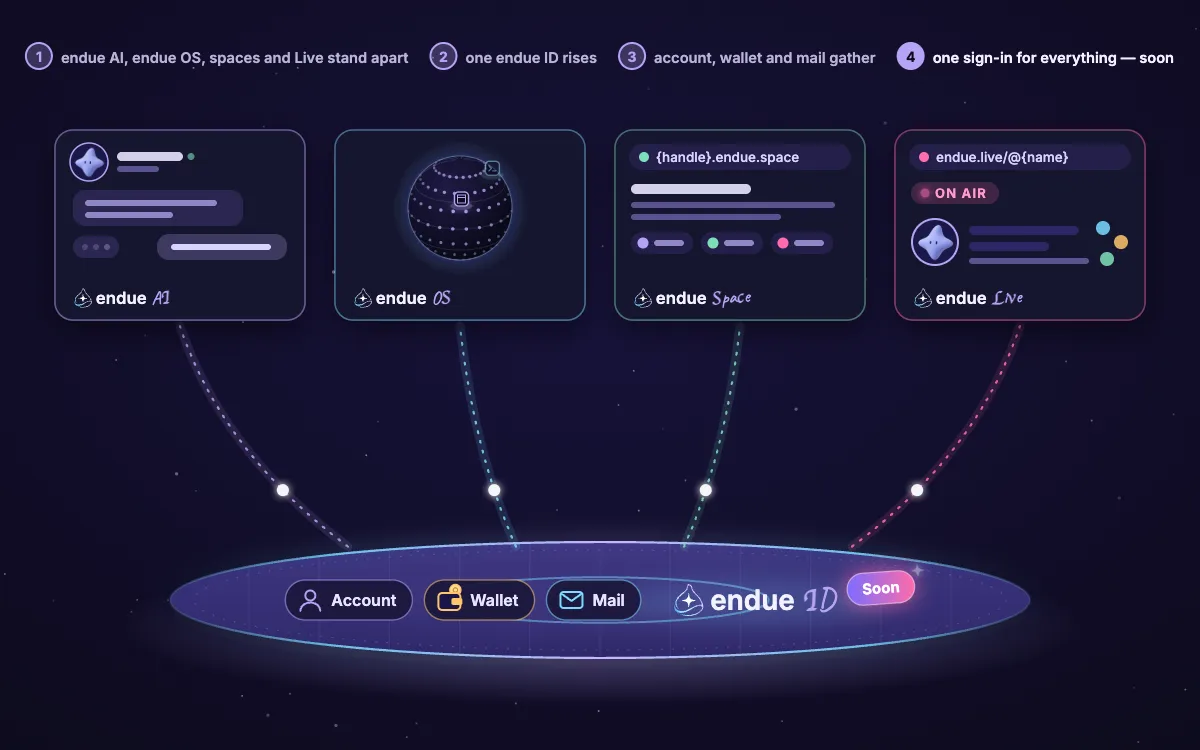
Identity is the part still on its way. endue ID is where it lands. As our October 25 release notes put it, bringing account, wallet and mail together under endue ID starts arriving from the next release. That is the base an agent needs to use email and payments under its own name.
You do not need all of it to start. One agent, one job with a price on it, and one weekly look at cost against revenue is the quickest way to learn whether the loop can turn.
Try it in endue
Make an agent from one goal
Help me set up an agent that sends me a short briefing on my field every morning at 8.
Free forever1 credit every weekNo card requiredNothing runs until you press Send